
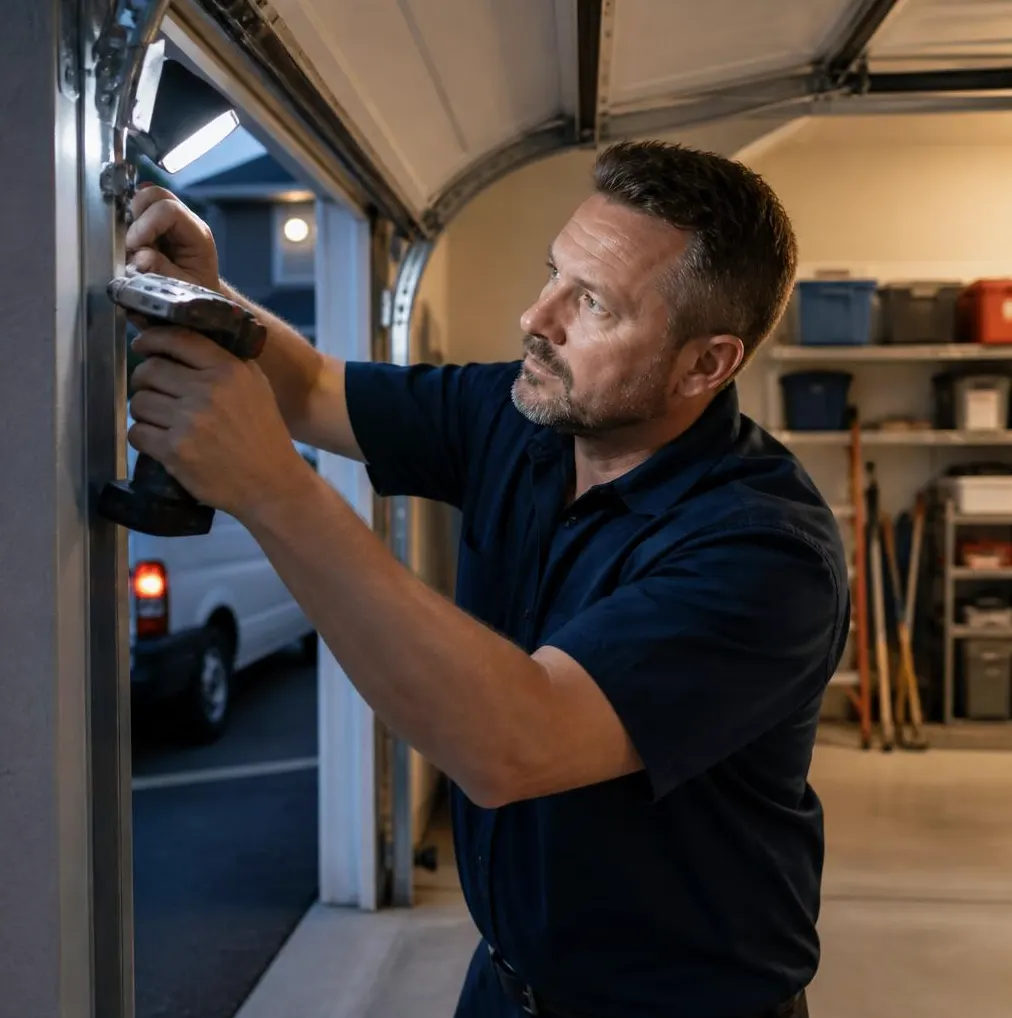
If you disconnect the opener and lift the door by hand, it should stay put at any height you let go — that's a balanced door. The exceptions: very heavy doors like insulated steel or carriage-style doors may drift slightly even when properly balanced, and older doors with original hardware sometimes feel "balanced enough" right up until a cable or spring finally gives out. A quick test now tells you which situation you're actually in.
Why Balance Matters for Your Opener
Garage door openers are built to move a door, not lift its weight. The springs are supposed to do the heavy lifting; the opener just pushes the door the rest of the way along the track. When a door is out of balance — usually from a weakening spring — the opener's motor and gears start compensating for weight the springs should be carrying. Over weeks and months, that shows up as a motor that runs hot and loud, a trolley or drive gear that wears out early, a chain or belt that stretches faster than normal, or an opener that simply stops lifting the door partway and reverses. Homeowners often replace the opener when the real problem was a spring that's been under-supporting the door for months.
Tools You'll Need
- Work gloves
- A flashlight
- A step stool, if your manual release cord is out of easy reach
- A second person, recommended for heavier insulated or wood-look steel doors
Step-by-Step: Testing Your Door's Balance
- Close the garage door completely.
- Find the manual release cord (usually a red handle hanging from the trolley) and pull it to disconnect the door from the opener arm.
- Lift the door by hand to roughly waist height, about halfway open.
- Let go. A properly balanced door stays exactly where you left it. One that drifts downward, creeps upward, or drops suddenly is out of balance.
- Repeat the test with the door raised to about three-quarters open, since some doors feel fine at one height and off at another.
- Reconnect the opener by pulling the release cord again (you should feel it engage) and run the door through one full open-close cycle to confirm it's reattached properly before walking away.
If the door won't stay put at any point in that range, or if it feels noticeably heavier or lighter than it used to, the springs are telling you something.
What You Can Safely Check Yourself vs. What Needs a Technician
Homeowner-safe
- The manual balance test above
- Listening for grinding, humming, or straining sounds during the opener's lift cycle
- Visually checking cables for fraying, kinks, or rust — without touching them
- Inspecting tracks for visible rust, bent sections, or gaps at the wall brackets
- Lubricating rollers, hinges, and the opener's chain or screw drive with a garage-door-specific lubricant (never the springs themselves, and never WD-40 as a long-term lubricant — it attracts grit)
- Tightening visibly loose bolts on tracks and brackets
Technician-only
- Adjusting or replacing torsion springs, which are under extreme tension and can cause serious injury if mishandled
- Adjusting extension spring tension or replacing frayed safety cables
- Resetting the opener's force and travel limits after a spring adjustment
- Realigning tracks on a door that's heavy or already showing signs of binding
If the balance test fails, don't try to compensate by adjusting the opener's force setting higher — that just hides the problem while putting more strain on the motor and gears.
Why This Matters Before a Connecticut Winter
A door that's already running slightly unbalanced in October tends to get worse once the freeze-thaw cycle starts. Moisture works into track joints and hardware, road salt and coastal humidity accelerate rust on springs and cables, and cold temperatures make steel springs stiffer and less forgiving of extra load. A door that was barely getting by in September can bind, jerk, or snap a cable the first week it has to fight ice buildup on the bottom seal. Southeastern Connecticut's older housing stock often still has original springs and hardware that have simply never been tested — this is a good week to find out where yours stands before the first nor'easter rolls through.
When to Call New London Garage Door
If your door fails the balance test, or you hear the opener straining partway through its cycle, that's a job for a technician rather than a DIY fix. We'll check spring tension properly, handle spring replacement with the correct spring size and tension for your specific door, and inspect cables, rollers, and tracks for wear while we're there. If you'd rather catch problems before they turn into a Saturday morning emergency, our garage door maintenance visits cover the balance check, lubrication, and hardware inspection in one trip — timed well right before winter sets in.
Serving New London, Groton, Waterford, Norwich, Montville, East Lyme, Stonington, and Ledyard, New London Garage Door is ready to test your balance, service your springs, and get your door winter-ready. Call us today to schedule your fall garage door maintenance.